
Cosmic Humility
More of that please.

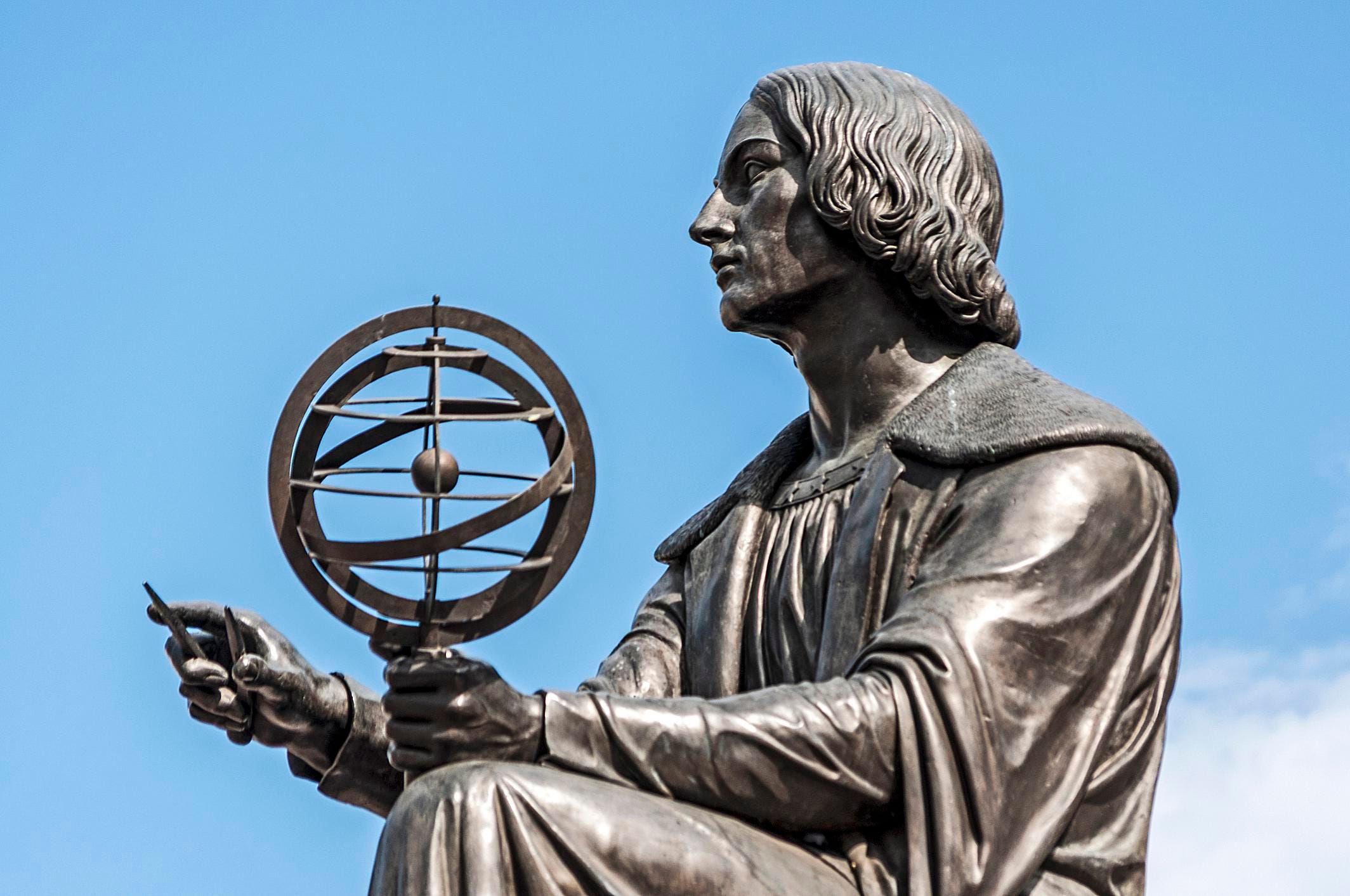
Polish Astronomer Nicholaus Copernicus (1473-1543) is generally credited with discovering that the Earth revolved around the sun, and not the other way around. But this isn’t true. I’m not here to diminish Copernicus, his work just built on what had come before. His argument was just the most comprehensive at the time, and put the final steak in the heart of the Geocentric model (Earth as the center of the universe). Ancient Egyptians had discussed such a possibility and Aristarchus of Somos, a Greek Astronomer who lived from 310 to 230 BC proposed a heliocentric model of the universe well before Copernicus.
To give Copernicus his flowers though, he wasn’t a one trick pony. He was one of the first to argue that the Earth rotated on its axis, developed a system for tracking planetary motion, realized that the stars in the sky were objects enormously far from Earth and not fixed points in the sky, and most importantly marked a paradigm shift in scientific thinking. The heliocentric model of the Universe (the differentiation of solar systems, galaxies and universes would come later) blew up the scientific thinking of the time.
We are in a similar time.
The parallel of today.
We are in the environmental, cultural and political mess we are in due largely to a lack of humility. This belief has a name; anthropocentrism.
The main assertion here is that human beings are superior to other species and that human interests should take precedence over those of the environment and all the other life on earth. This point of view means that everything on Earth is there to serve man, and has no intrinsic value of its own.
This is a similar problem to the one Copernicas and those astronomers that came before him solved, in that it puts man above all, assuming that mankind must be the center of the universe.
Copernicus had a bit of a simpler task however. His assertion could be proved through the scientific method. After all, you could check his work with math.
That we still live in an anthropocentric world that would rather destroy itself than admit that not everything on Earth needs to serve man shows the challenge before us. We could admit as a civilization over 500 years ago that the Earth revolves around the sun. But we still can’t admit today that we are just a part of nature, with no real dominion over it.
Of course, anthropocentrism isn’t the only way of knowing. Many peoples in the past didn’t hold this view, many today don’t and many in the future won’t. It is however the dominant strain of thought behind our need to pursue growth at all costs. Anthropocentrism is the story we tell ourselves to justify our misdeeds and to rationalize our destruction of the natural world.
To change the paradigm, we would need to admit that just being one of millions of special things on Earth, and not the only special thing, is enough.
That would be a Copernican level shift in the status quo. Will it take the collapse of our civilization for us to realize that, or can we collectively change the story we tell ourselves before that?
"Anthropocentrism is the story we tell ourselves to justify our misdeeds and to rationalize our destruction of the natural world."
Worthy of an entry in my database of my 10,522 favourite quotes! :-)