

That won’t grow there.
A paper just came out from Janne J Salovaara and Sophia Hagolani-Albov with the straightforward title: A greener future cannot be bought: On the paradoxes of practicing contemporary consumption-driven sustainability.
The authors observe that the current sustainability moment is mostly about maintaining the status quo, just with a nicer, greener wrapper. The cultural and societal transformation needed to avoid overshoot and collapse are not part of the project.
The authors critique the current form of sustainability that is commonly framed as demanding transformative shifts in societal and global processes, by showing that such a transformation just isn’t happening. The sustainability practices today still support a consumption-centered system - which is the real problem.
They argue that sustainable activities, such as tree planting give people false hope. They are well intentioned, but not anywhere near adequate in addressing the problems of climate and overshoot.
Salovaara and Hagolani-Alboy conclude that our current global sustainability efforts hide the business-as-usual behind a perception of participation in “sustainability”.
Potemkin Sustainability
There is a great story from 18th century Russia that in 1787, Grigory Potemkin, a field marshal in the Russian military, built portable settlements, often just the facades of buildings, along the banks of the Dnieper River to impress the Russian Empress (Catherine II) in her tour of Crimea. Once Catherine passed through, the facades would be disassembled and rushed ahead of her so she could be impressed again by another impressive settlement along her tour.
Unfortunately, the truth behind the story isn’t as impressive. Catherine the Great did tour Crimea at the time, and Potemkin did pressure the locals to spruce things up for her, but it is unlikely that the moving Potemkin Villages ever existed to the extent that the story claims.
Oh, well. Never let the truth get in the way of a good story.
I was lucky enough to be “present at creation” of the current form of sustainability. I was one of many people present at the UN led meetings that resulted in the “Principles of Responsible Investment” being released in 2016. The principles set out the sustainability principles that investors should adopt when making investments. The principles boiled down to considering environmental, social and governance issues (ESG issues) in the investment process.
The thinking behind these rules was that in some cases, ESG issues would be material to investors. That just means that they were important enough to influence investment decisions. For example, a board of directors that was subservient to a CEO and would not hold him accountable was a corporate governance red flag. A company that polluted the water near its factories that harmed people near that river was an environmental red flag. A company with a terrible health and safety record was a social red flag.
I’m not going to go through all ESG issues here. I just want to show that two decades ago, including these things in the investment process was a bit of a revolution. At first most people were skeptical. At the time, you might see one breakout panel (a small side meeting) on sustainability at a three day investment conference.
But sustainability grew, and acceptance of ESG grew over the years. Now, there are whole three day conferences devoted to ESG and sustainability and a whole sustainability consulting industry exists.
How did this come about?
People began to realize that they could get paid extra money for products or financial products (mutual funds and ETSs) that promised to be sustainable. Consultants followed the money too.
There was only one problem. Nothing had to actually contribute to the planet being more sustainable. There was hardly anyone checking claims of sustainability, and those that did were often ignored or harangued for making it too hard “to do the right thing.”
This is of course a tremendous lack of leadership. But one that is not surprising. Our current way of living, or current story, the one our politicians, business leaders and talking heads in the media tell us, is that “growth” is our reason for being. We need to keep our economies growing or everything will collapse (it won’t). Growth is the natural order of things (it isn’t). We had economies that didn’t worship at the altar of growth for nearly all of human history, and somehow, we got this far. The only thing that grows forever is cancer - until it kills its host.
Sustainability professionals. Ask yourself; are you making the world a better place, or are you the hype man for a cancer consuming humanities future?
I asked myself that question, and that’s the reason I’m not in sustainability anymore.
Don’t give truth to the lie.
The paper by Salovaara and Hagolani-Alboy exposes the lie told to so many of us who wanted to make a difference.
The current sustainability movement on Earth is mostly a Potemkinesque facade. A patina of paint slapped on a house on fire.
Green growth isn’t possible. Stop saying that it is.
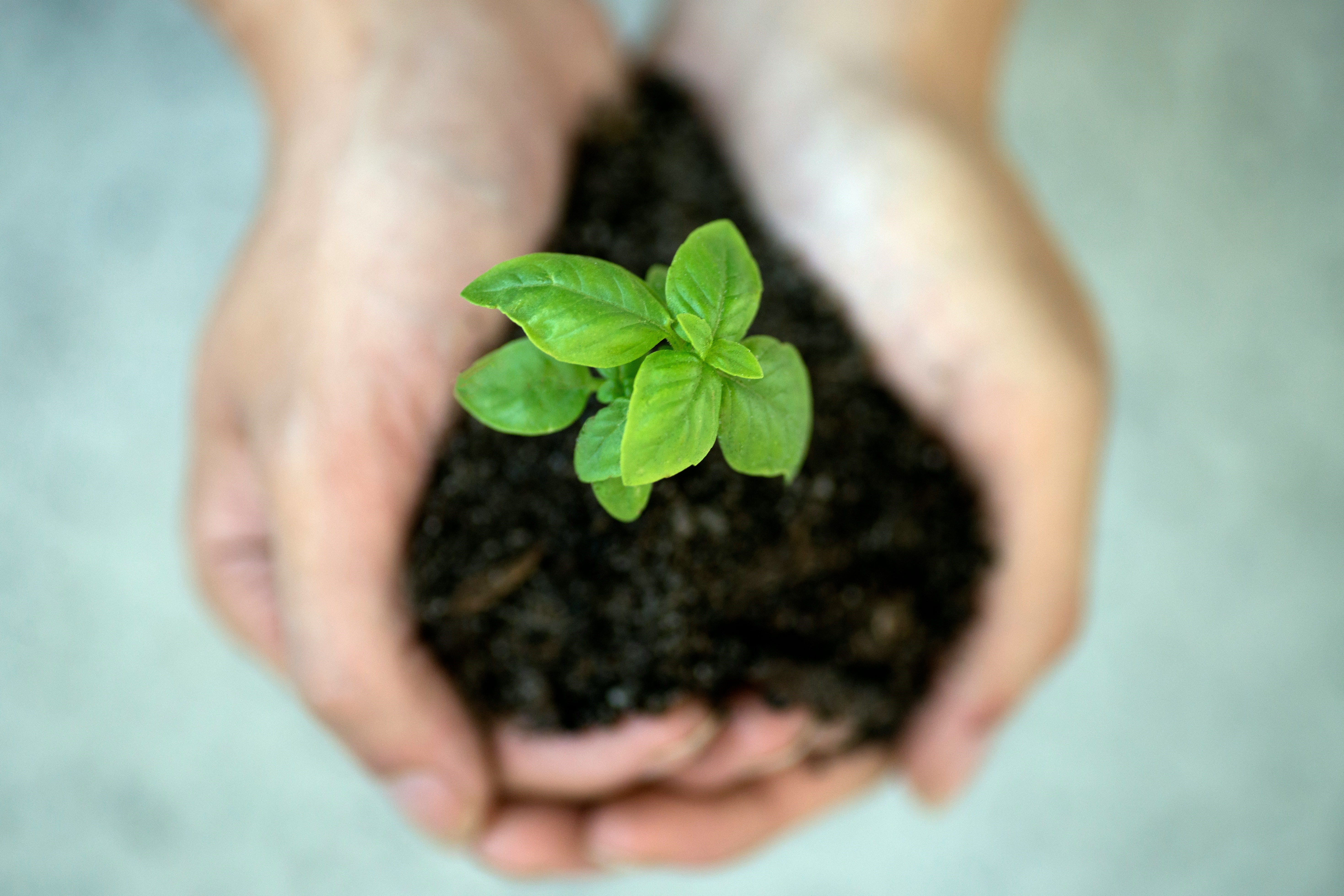
Tree planting, carbon offsets, and many other efforts do more to make people feel better than they do to actually improve things. Plant trees where you can and teach your children the importance of trees. But if you want to save the world, don’t cut down trees, strategically retreat from the land we are using to destroy ourselves and let mother nature replant over decades and centuries. Forests are not built with hands, but when hands get out of the way.
I’m heading to New York next week for the annual “Climate Week” set of events focused on climate change. Most of these events will be about people convincing themselves that things like tree planting, carbon offsets, slightly tilting portfolios away from oil, and other minor tweaks will make a difference. Most won’t.
But I know I will find people there who want to do the right thing, who have not heard enough about ecological economics and degrowth and will want to hear more.
I challenge the sustainability professionals at climate week (and during every week) to take a long look at the sustainability world and ask if it is getting the job done.
It isn’t, but people have to come to that conclusion for themselves.
When they do, go find people talking about collapse, ecological overshoot and degrowth. Then start building a better system outside the current one.
I’m guessing that there won’t need to be a climate week in about ten years, either because people have given up on green growth, or because they have just given up.
Photo by Jennifer Delmarre on Unsplash
Two comments. One is that it isn't 100% true that we need to "get out of the way" and let Nature repair itself--we can't do that entirely with 8.5 billion humans on the planet, unless we let most of them die. And indigenous people have often found ways to be a useful, not just not-harmful, link in the web of life. But it's quite true that for us to get there would require wrenching change in the way we do just about everything, including discarding economic growth.
The second one comes from your using the "perpetual growth is the ideology of the cancer cell" metaphor. My mother and my sister both died of breast cancer and I decided I ought to learn more about cancer. I checked out a book from the library, which was mostly about advances in cancer treatment over the past century, but I learned two interesting things that I think reflect on the economic-growth-as-cancer metaphor. One is that cancer can redirect blood vessels toward itself, to feed its growth [neocolonial resource theft] and the second is that sometime a cancer can learn to resist a cancer drug that was once effective against it. What is the equivalent there? I guess the takeover of regulatory agencies, of the media, of the elections process. Once we could organize to get more honest people elected; regulatory agencies and laws were created to protect workers, consumers, the environment. But now the regulatory agencies are virtually all captured, the billionaires and corporations own not only what's left of the legacy media, but the monopolies that are the gatekeepers of the electronic media. They're currently using the Charlie Kirk killing for a direct assault on the First Amendment, in the secure knowledge that the Supreme Court will okay it all, no matter how blatantly unconstitutional. The economic growth cancer has metastasized to the point where it isn't much short of killing its host, but the humans acting as its agents are dead set against any limits, either full of delusions about moving to Mars, merging with machines, etc, or they have quiet plans to redirect all resources to their own enclaves and let the rest of us fight for survival in the hot, hungry, polluted places outside them, secure in the knowledge that they won't have to actually kill us (except the potential leaders of the rebellion they know is coming) but can just let most of us die of starvation, disease or conflict.
Well-meant ideas seem generally to be taken up by larger corporations as green wash, to put a glossier finish on their corporate image that allows the huge profit taking to carry on and once the pressure to do so is removed or the idea is at risk of being applied with integrity there is an oily-green slick left as they shed the pretence.
Don't give up trying, though. While boards will continue to make these decisions on the back of their declared priority to shareholders individuals are more malleable and sowing the seed of doubt is not difficult as I suspect many wrestle with their conscience already and compartmentalise as much as they can to keep their well-paid jobs.